

How do I know when it's time to replace my tires?
You should replace your tires if the tread depth falls below 2/32 of an inch (1.6 mm), if you notice uneven wear, cracks in the sidewall, or persistent pressure loss. A simple way to check tread depth is the Penny Test: insert a U.S. penny into your tire tread with Lincoln’s head upside down. If you can see the top of Lincoln’s head, your tread is worn out and needs replacement.
How To Size Your Tires
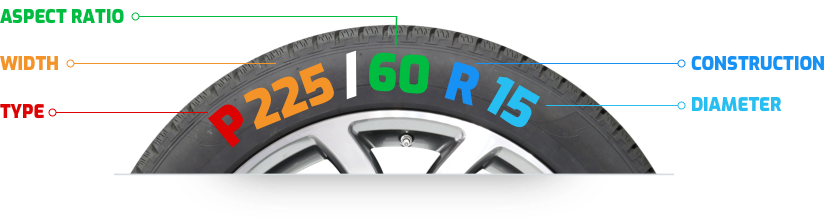
To find the exact tire size for your vehicle, you can check the following locations:
-
The Sidewall of Your Current Tires: Look for a sequence of numbers and letters raised on the side of your tire (e.g., 275/70R22.5 or LT245/75R16).
-
Vehicle Information Placard: Located inside the driver’s side door jamb, inside the fuel door, or in your vehicle’s owner’s manual.
Understanding the Numbers in Your Size
Here is what a typical commercial/truck tire size code (such as 275/70R22.5) means:
-
275 (Tire Width): The width of the tire in millimeters from sidewall to sidewall.
-
70 (Aspect Ratio): The height of the sidewall expressed as a percentage of the width (in this case, 70% of 275 mm).
-
R (Construction Type): Stands for Radial construction, the standard for modern performance and durability.
-
22.5 (Wheel/Rim Diameter): The diameter of the wheel rim in inches that the tire is designed to fit.
Tips Before You Order
-
Check All Tires: Ensure all existing tires on the same axle share the same size and load index.
-
Verify Load Range & Speed Rating: Beyond dimensions, ensure your new tires match or exceed the required load rating (e.g., Load Range H / 16-Ply) to handle your payload safely.
How often should I check my tire pressure?
Check your tire pressure at least once a month and before long road trips. Always measure pressure when the tires are “cold” (before driving or at least three hours after driving) to get an accurate reading. Correct tire inflation improves fuel efficiency, handles better, and extends tread life.
What is the recommended tire pressure for my vehicle?
Your recommended tire pressure (measured in PSI) is listed on a sticker located on the driver’s side door jamb or in your vehicle’s owner’s manual. Do not rely on the max PSI printed on the tire sidewall, as that indicates the maximum load capacity, not the optimal pressure for your specific vehicle.
How often should I rotate my tires?
Tires should generally be rotated every 5,000 to 8,000 miles (or during every oil change). Regular rotation helps ensure even tread wear across all four tires, extending their overall lifespan and maintaining smooth vehicle performance.
What do the numbers and letters on my tire's sidewall mean?
The code on your tire sidewall (e.g., P215/65R16 95H) indicates its key specs:
-
P: Passenger vehicle tire (LT = Light Truck).
-
215: Tire width in millimeters.
-
65: Aspect ratio (height of the sidewall as a percentage of the width).
-
R: Radial construction.
-
16: Wheel diameter in inches.
-
95H: Load index (95) and speed rating (H).
What is the difference between All-Season, All-Terrain, and Winter tires?
-
All-Season Tires: Designed for general daily driving in dry, wet, and light winter conditions.
-
All-Terrain (A/T) Tires: Built with deeper treads for both highway driving and off-road conditions (gravel, mud, dirt).
-
Winter/Snow Tires: Feature softer rubber compounds and specialized tread patterns designed specifically to grip snow and ice in freezing temperatures.
What is tire balancing vs. wheel alignment?
-
Tire Balancing: Corrects weight distribution around the tire/wheel assembly to prevent vibrations in the steering wheel or vehicle at high speeds.
-
Wheel Alignment: Adjusts the angles of your vehicle’s suspension so that the tires make proper contact with the road, preventing the vehicle from pulling to one side and avoiding uneven tread wear.
How long do truck and commercial tires typically last?
The lifespan depends on load capacity, driving habits, road conditions, and maintenance. On average, standard passenger tires last 40,000 to 70,000 miles, while heavy-duty or commercial truck tires can last anywhere from 50,000 to over 100,000 miles with proper inflation and regular maintenance. Most tire manufacturers recommend replacing tires after 6 to 10 years, regardless of tread depth, due to rubber degradation.
Can I replace just one tire, or should I replace all four?
For safety and balanced handling, it is best to replace tires in pairs (front or rear) or as a full set of four. This is especially critical for All-Wheel Drive (AWD) vehicles, where mismatched tread depths can strain the drivetrain. If you must replace only one tire, ensure it matches the existing tires in size, model, and speed rating, and mount it on the rear axle.